(850) 666-6573info@thegaragedoorrepairtallahassee.com2020 W Pensacola St, Tallahassee, FL 32304
(850) 666-6573info@thegaragedoorrepairtallahassee.com2020 W Pensacola St, Tallahassee, FL 32304
Home / Garage door guides
Your garage door does not usually fail all at once. It warns you first. A noise that was not there last month. A hesitation before it lifts. A remote that used to work every time and now takes three tries.
Most homeowners notice these things and wait. The door still opens, so it feels fine to put off. Then one morning it does not open at all, and now you are late for work standing in the driveway.
The good news is that almost every one of these signs points to something specific. Once you know what to look for, you can tell the difference between a small fix and a real emergency before it becomes one.
The most common signs you need garage door repair are a loud bang followed by a heavy door, grinding or scraping during operation, a door that reverses before it closes, and visible sagging on one side. Any single one of these usually points to a specific part, not a mystery.
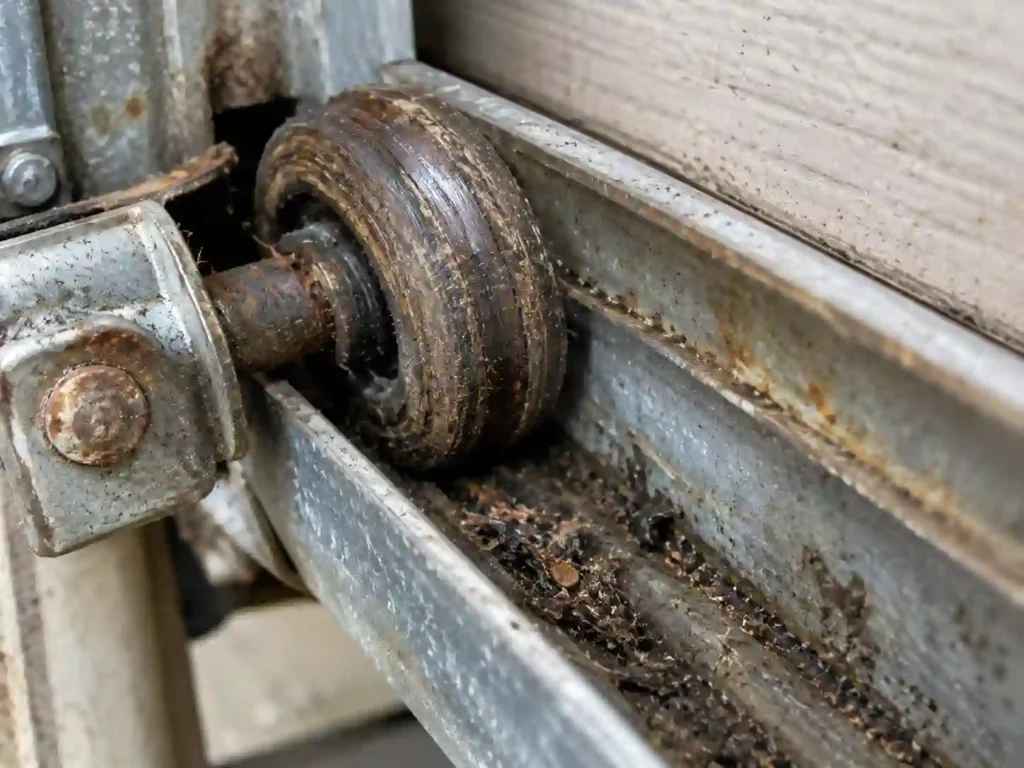
A door that suddenly feels twice as heavy almost always means a broken spring. Grinding or squealing points to worn rollers or a dry track. A door that closes partway and pops back open is rarely the door itself. It is the safety sensors near the bottom of the track, and they are usually an easy fix.
Not every sign means the same thing, and treating a cosmetic issue like an emergency wastes money just as easily as ignoring a dangerous one costs you later. Use the table below to figure out which category your door falls into before you decide what to do next.
| Sign | Likely Cause | Urgency |
|---|---|---|
| Loud bang, door will not lift | Broken torsion spring | Stop using it now |
| Door reverses before closing | Misaligned photo-eye sensors | Schedule this week |
| Grinding or scraping noise | Worn rollers, dry track | Schedule this week |
| Door sagging on one side | Cable or spring imbalance | Stop using it now |
| Slower than usual, no other symptoms | Aging opener motor | Monitor |
| Remote works inconsistently | Battery, keypad, or opener board issue | Monitor |
A broken spring or an uneven, sagging door are the two situations on this list that carry real injury risk if you try to force the door open by hand. Everything else can usually wait a few days without getting worse.
If your door falls into the “stop using it now” category above, this usually isn’t a wait-and-see repair. A broken spring or snapped cable gets more dangerous and more expensive the longer it sits, especially once Tallahassee’s humidity starts working on exposed metal. Most homeowners in this spot can get a technician out the same day they notice the problem.
Tallahassee’s heat and humidity speed up nearly every one of these failures compared to drier climates, which is worth keeping in mind before you assume a problem is minor just because it is new.
A garage door is not supposed to be loud. When it suddenly is, the sound itself usually tells you where to look before a technician ever shows up.
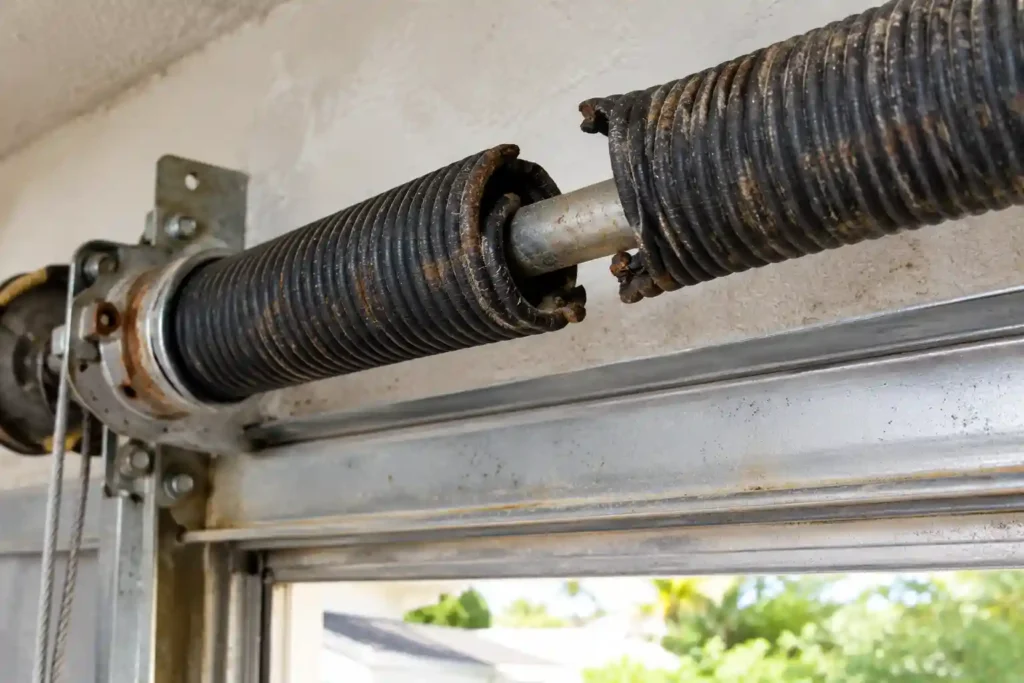
A sharp bang that sounds like a gunshot almost always means a torsion spring snapped. This is the thick coiled spring mounted above the door that carries most of its weight. A steady grinding or scraping sound during operation usually points to worn rollers or a track that has lost its lubrication. A high-pitched squeal is often just a dry hinge, the easiest and cheapest fix on this entire list.
Once a torsion spring breaks, the door loses its counterbalance completely. What felt like a light, easy lift now weighs several hundred pounds, and the opener motor was never built to lift that weight on its own. Forcing it, by hand or by opener, is how people get hurt and how openers burn out early.
Gradual changes are easy to dismiss because nothing dramatic happens on any single day. But a door that takes noticeably longer to open, or shudders partway through the cycle, is telling you something is already wearing out. One of the clearest signs you need garage door repair is a door that hesitates or moves unevenly instead of gliding in one smooth motion.
Uneven movement usually means one side of the door is under more strain than the other, often from a cable that has started to fray or a track that has drifted slightly out of alignment. A gradually slowing opener, with no other symptoms, is more often just an aging motor reaching the end of its useful life.
Either way, the fix gets cheaper the earlier you catch it. A track that is slightly out of alignment is a quick adjustment. A track that has been pulling against a bad cable for six months is a bigger job.
A door that stops partway or reverses on its own is rarely a problem with the door itself. In most cases, it is the photo-eye sensors near the bottom of the tracks, the small safety devices that stop the door from closing on something in its path.
Dirt, spider webs, or even direct sunlight hitting the sensor at the wrong angle can trigger a false reading and send the door back up. Wiping both sensors clean and making sure they are pointed directly at each other solves this more often than people expect.
If the sensors are clean and aligned and the door still will not close, the problem usually shifts to the opener’s limit settings or a failing circuit board. That is not something worth guessing at. A door that will not close all the way is also a security gap, not just an inconvenience.
Some signs you can see before you ever hear them. A panel with a dent, a door that sits slightly crooked in its frame, or a door that has come off its tracks entirely all fall into this category, and none of them fix themselves over time.
A single dented panel is often cosmetic and can be replaced without touching the rest of the door. A door sagging on one side is a different story. It usually means the spring or cable on that side has stretched, weakened, or started to fail, and the imbalance will get worse every time the door cycles.
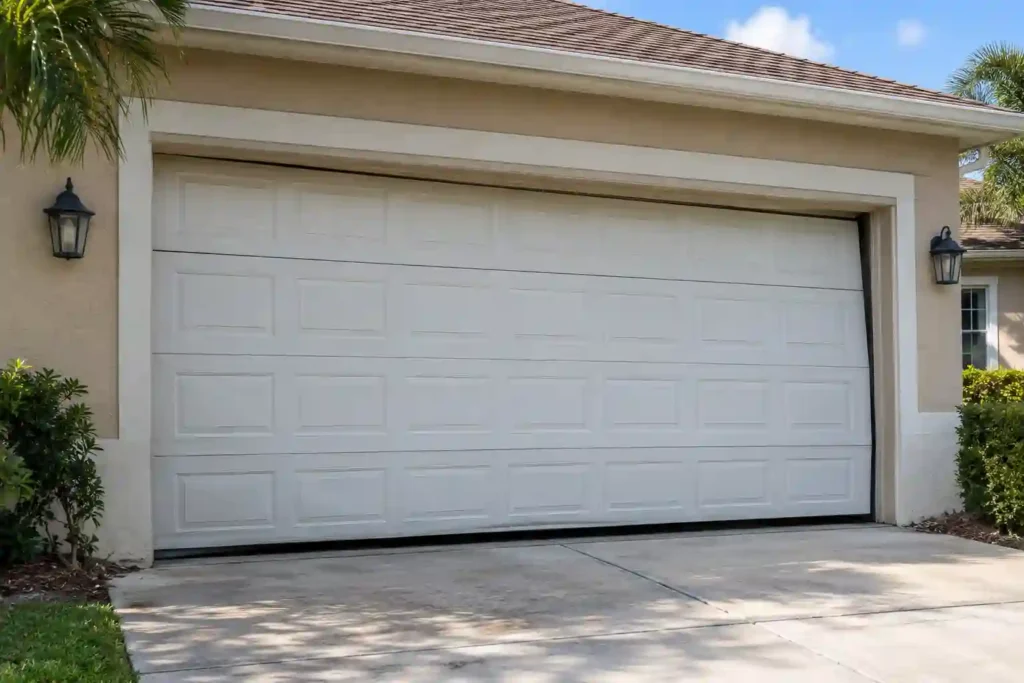
A door that has jumped its tracks needs to stay closed until someone looks at it. Running the opener against a door that is off-track can bend the track further, snap a cable, or damage the opener motor trying to force movement that should not be happening. If you’re dealing with a door that’s visibly off its rails, off-track garage door repair is usually a same-visit fix rather than the ordeal it looks like.
Sometimes the door itself is fine and the problem lives entirely in the opener. A remote that used to work every time and now needs three or four presses, a keypad that stops responding, or an opener light that blinks a specific pattern are all signs worth paying attention to rather than just replacing batteries and hoping.
Most major opener brands, including LiftMaster, Genie, and Chamberlain, use blinking light codes to flag a specific fault before the whole unit fails. A slow, consistent blink often points to a sensor or wiring issue rather than the motor itself, which is a much cheaper fix if it’s caught early.
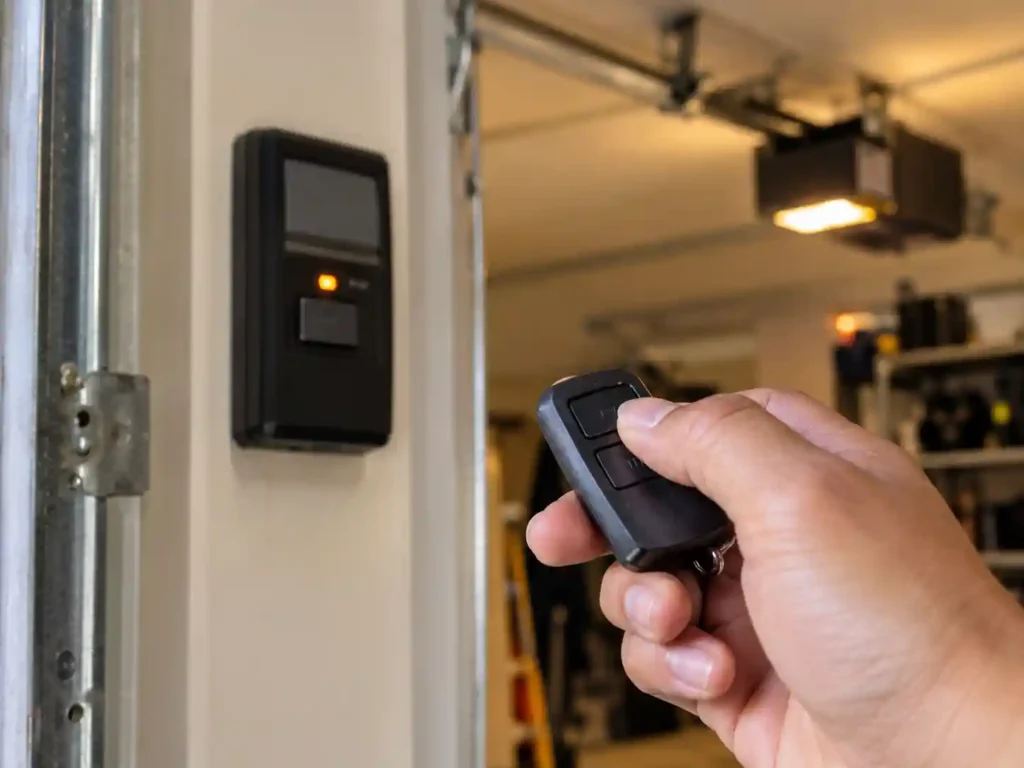
An opener that has simply gotten slower and noisier over several years, with no error codes and no blinking lights, is usually just reaching the end of its lifespan rather than showing a specific fault. If your remote or keypad has been acting up, garage door opener repair in Tallahassee usually costs far less than most homeowners expect before they call and ask.
A garage door in Tallahassee wears differently than the same door in a drier, cooler climate, and that difference shows up years before most homeowners expect it to. Humidity accelerates corrosion on springs and cables long before they show visible rust, which is why a spring here can fail younger than the same part would somewhere with less moisture in the air.
Summer heat causes metal tracks to expand slightly, which is often enough to throw off an alignment that was perfectly fine in cooler months. Hurricane season adds its own strain, putting repeated pressure on door panels during high winds, and a sudden lightning storm can send a power surge through an opener’s control board without warning.
This is also why an annual inspection matters more here than it does in most parts of the country. A 25-point safety inspection catches the early corrosion, the slightly stretched cable, or the track that has started to drift, months before any of it turns into the kind of failure that leaves you stuck.
Most of the time, repair is the right call. Replacement only makes financial sense in a specific set of situations, and it’s worth checking your door against these before assuming the worst.
Repair is usually the better choice when the door is under 10 to 15 years old, the damage is limited to one part, and the repair cost comes in under half of what a full replacement would run. If the frame and structure are still solid, there is rarely a reason to replace the whole system just because one component failed.
Replacement starts to make more sense once multiple parts are failing at the same time, the door has passed the 20-year mark, or the repair estimate creeps close to half the price of a new one. Wanting better insulation, security, or curb appeal is also a legitimate reason to replace early, even if the current door is technically still working.
| Repair Makes Sense When | Replacement Makes Sense When |
|---|---|
| Door is under 10 to 15 years old | Door is 20 or more years old |
| Damage is limited to one part | Multiple components are failing together |
| Repair cost is under 50% of replacement | Repair cost approaches half of replacement |
| Frame and structure remain solid | You want better insulation or security |
If the numbers above point toward replacement rather than repair, it’s worth getting a second look before committing to anything. A garage door replacement in Tallahassee doesn’t have to mean guesswork. A straight, upfront comparison of repair cost versus a new door usually makes the decision obvious within a few minutes.
If you’re standing in your garage looking at one of these signs right now, the most useful thing you can do is stop using the door rather than testing how bad it really is. Cycling a damaged door, even once more, is usually what turns a repair into a bigger repair.
Do not try to force a door open by hand if you suspect a broken spring. Without that spring’s counterbalance, the door can weigh several hundred pounds, and it can drop suddenly once you release it. If the opener is cycling erratically or making a grinding noise it did not make before, unplug it rather than letting it keep trying.
Beyond that, the safest move is simply to leave the door where it is and get an honest diagnosis before deciding anything.
Every sign covered here started small. A noise, a hesitation, a door that did not quite look right. None of them are complicated to figure out once you know what to look for, and most of them are far less expensive to fix now than they will be after another few months of daily use.
If your door is doing any one of these things right now, that is your answer. It is not waiting for you to be sure. Whatever these signs end up pointing to, a second opinion costs nothing to ask for. The team at Garage Door Repair Tallahassee has seen most of these problems play out across Killearn Estates, Southwood, and the rest of the city, and can usually tell you over the phone whether it’s something urgent or something that can wait.
Call (850) 666-6573Broken torsion spring replacement is the most common garage door repair by a wide margin. Springs carry the full weight of the door through thousands of open and close cycles, and eventually they simply wear out and snap, usually without much warning beforehand.
Most garage door openers last 10 to 15 years with normal use. Excessive vibration, worn gears, and aging electrical components can shorten that window, while regular maintenance tends to push it closer to the upper end.
Replacement makes sense once multiple components are failing at the same time or the door has passed 20 years old. Check your situation against the repair-versus-replacement comparison above for a clearer answer.
Sometimes, depending on the cause. Insurance may cover damage caused by a covered event like a storm, a fallen tree, or a vehicle impact, but it typically will not cover damage from normal wear and tear over time.
No. Without a working spring, the door can weigh several hundred pounds with no counterbalance supporting it. Attempting to lift it manually or force it with the opener risks injury and can damage the tracks or motor further.
This usually points to a specific fault the opener is trying to flag rather than a full failure. A blinking light pattern, a dead remote battery, or a misaligned sensor are the three most common causes, and the fix depends on which one it turns out to be.
A loud bang followed by a door that will not lift almost always means a spring. A door that sags to one side usually points to a cable. If the door moves fine by hand but the opener will not engage, the problem is most likely the opener itself.
Once a year, ideally before or after hurricane season. Tallahassee’s humidity and heat wear down springs, cables, and tracks faster than drier climates, which makes an annual check more valuable here than in most parts of the country.